
A Travelling Sprout
A Sprout has a Short Stay in Manila
By Shelley Banks
As far as international flights go, 7.5 hours is good for us. Breakfast in Brisbane and dinner in Manila (thanks to the time difference it was late afternoon when we arrived). I hadn’t flown with Philippine Airlines before and when I received an email saying I could bid for the third seat in our economy row for only $80, I thought, I’m going to like this airline (and yes, we did get the third seat for $80 so we were able to spread out). It was a smooth flight, and the cabin crew were wonderful.
Landing in a city of 13 million people, I expected the airport to be chaotic. But we were pleasantly surprised by how quickly and easily we grabbed our bags and moved through customs and immigration. Outside though, the chaos started. Like every other large Asian city I’ve been to, traffic lanes are a mere suggestion and what should have been three lanes, was instead, six cars across.
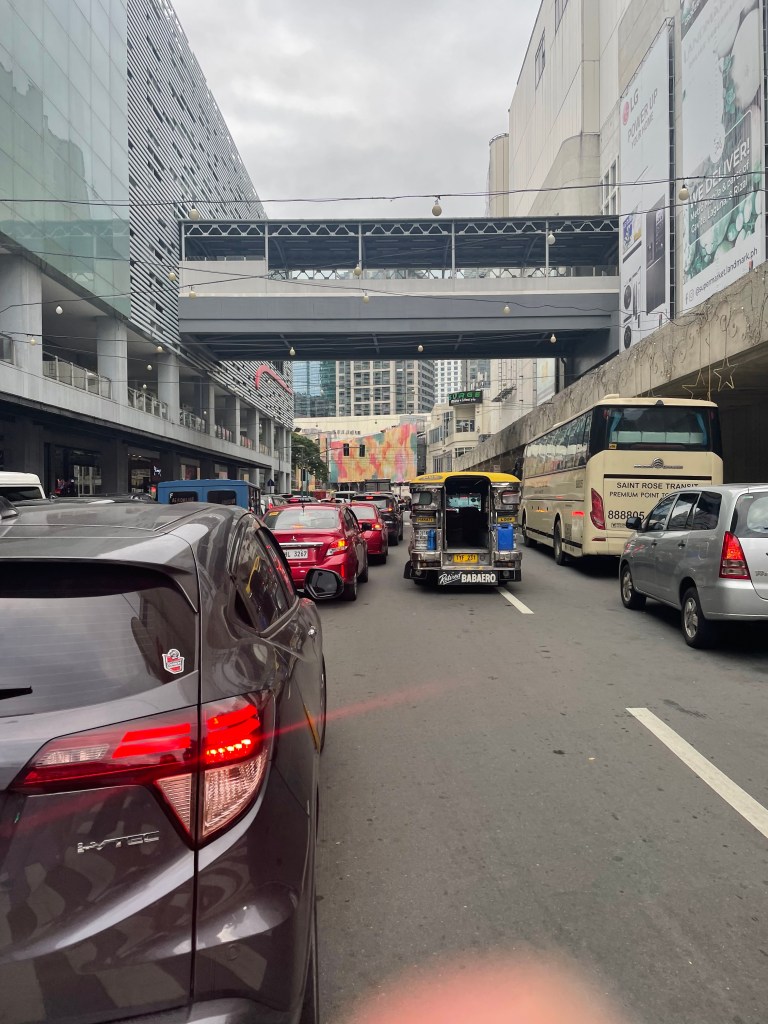
Metro Manila comprises 16 mini-cities and the one we were staying in, at the Shangri-la (thanks to their special deal), was Makati. When we arrived on Boxing Day, the lobby was filled with Christmas decorations including one of the largest Christmas trees I’ve ever seen. Tired after the flight, we had a quick swim before getting ready for dinner. And while the food and service were great, the best thing was the band playing in the lobby, which we could hear from our table. The two singers had amazing voices, and our waiter told us they’d be playing in the lobby the following night as well.
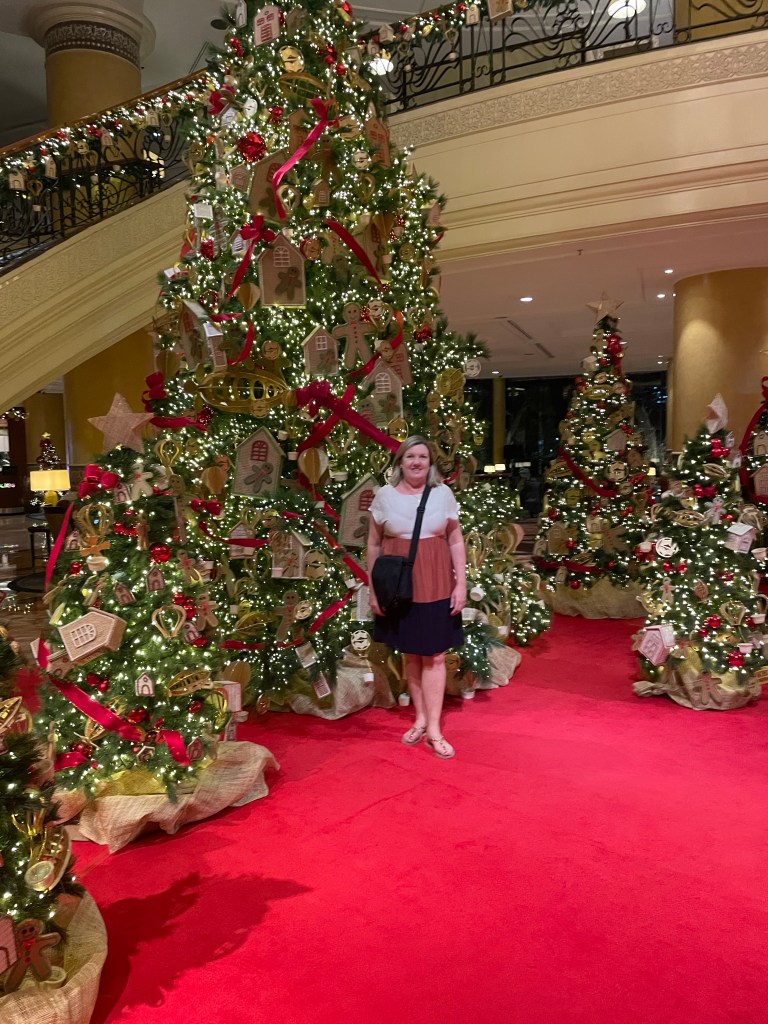
After eating too much food at the buffet, an early night was in order as the next day featured a full-day tour.
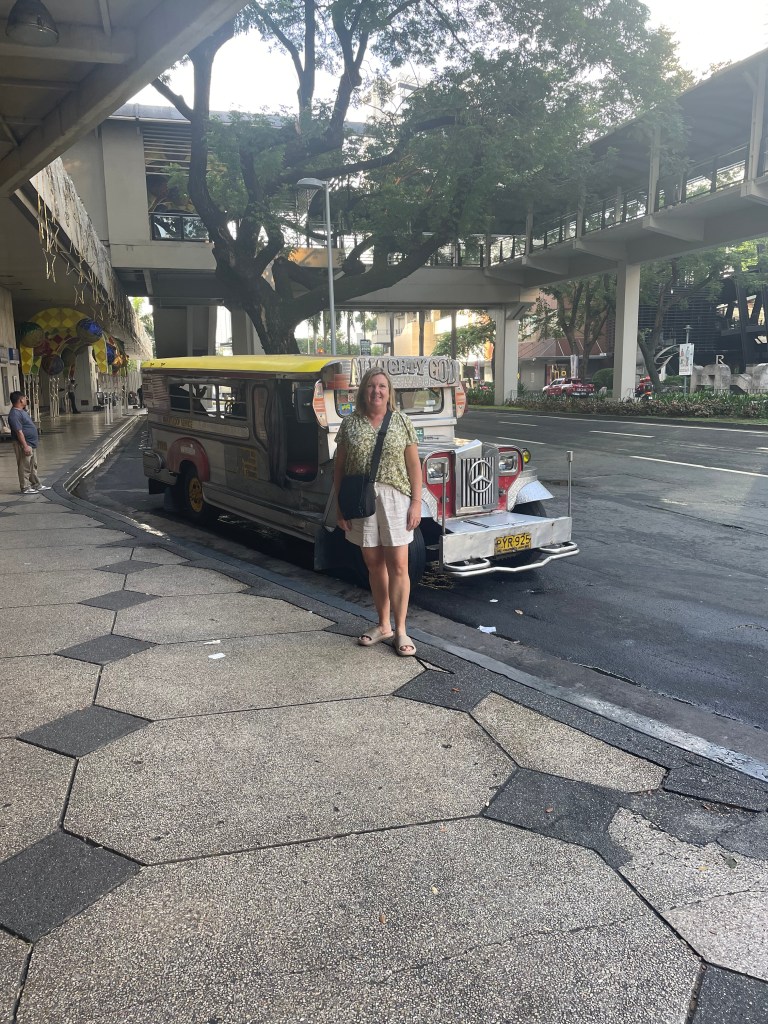
Prior to departing the following morning, we had time for breakfast and a walk around Makati during which, we came across our first Jeepney. We also came across the first of the mega malls located within Makati, this one featuring an array of high-end designer stores and, in the middle of the mall, a park and a Catholic Church. And lots of cats roaming around. Catering to a wide range of people, I guess.
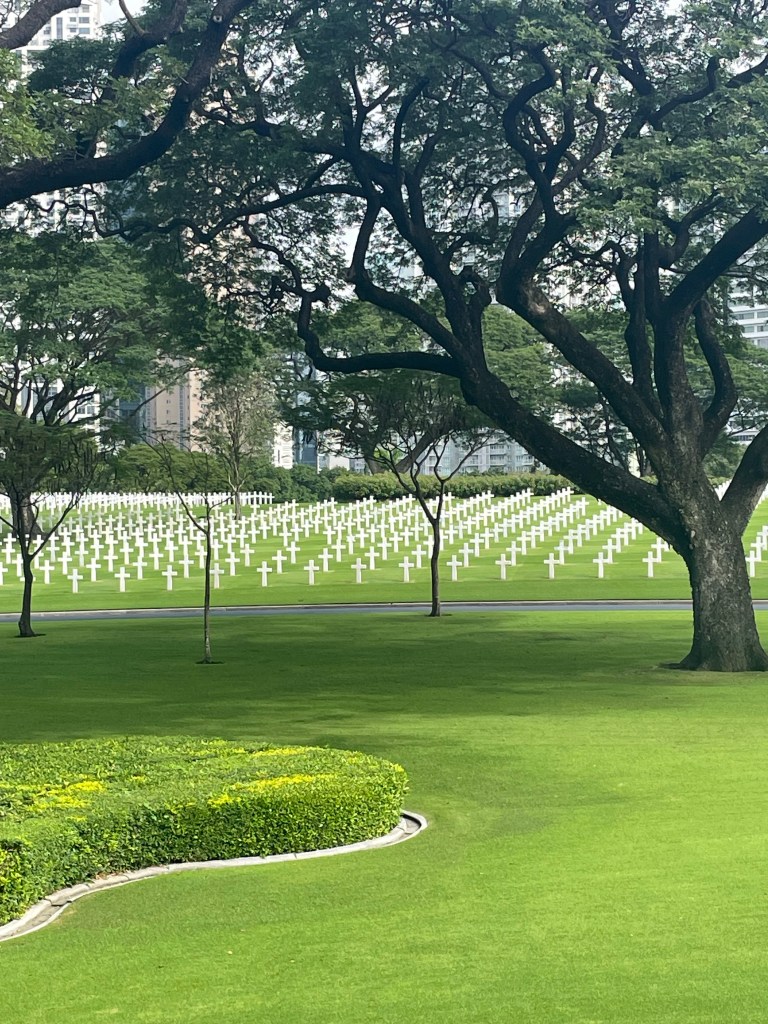
At our designated pick-up time, we met Victor, our guide for the day. A lovely man who was skilled at navigating through the hectic Manila traffic. The first stop on our tour was the America Manila War Memorial. Built to honour those who died in the defense of, then later, the liberation of the Philippines from the Japanese during World War II. It was a sombre experience but one I’m glad we did, a reminder of the sacrifices of so many, and so many of them so young. As you look out across the site, it’s hard not to be reflective as you take in the 16,000 crosses. I don’t know how many tourists visit, but in our minds, after being there, it’s a must-do.
From there we headed to Fort Santiago. Built by the Spanish in 1571, it also had a connection to World War II as the Japanese held prisoners there and on one occasion, when the nearby river rose so high that it flooded the fort, the Japanese left 300 prisoners locked in the cells and they all drowned.
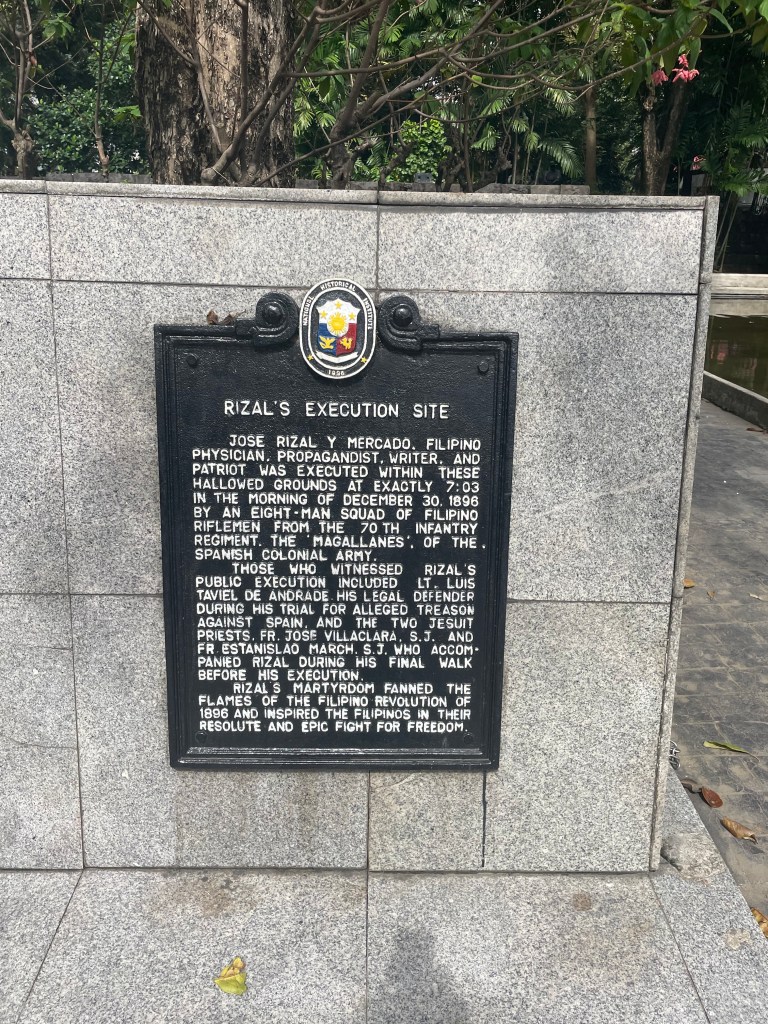
Located in the Intramuros (the walled city of Manila) it’s an important historical site. Named after Saint James (which in Spanish is Santiago) who is the patron saint of Spain it was built as a defense fortress. In 1896, it was the site of the execution of the Philippine national hero Jose Rizal. He pushed for self-autonomy for the Philippines and to take back the country from the Spanish. The Spanish took a dim view of that, so they shot him. Within the fort, there is a museum and shrine to Jose Rizal displaying memorabilia and, on the ground, you can see bronze footsteps showing his final walk from his cell to the site of the execution.
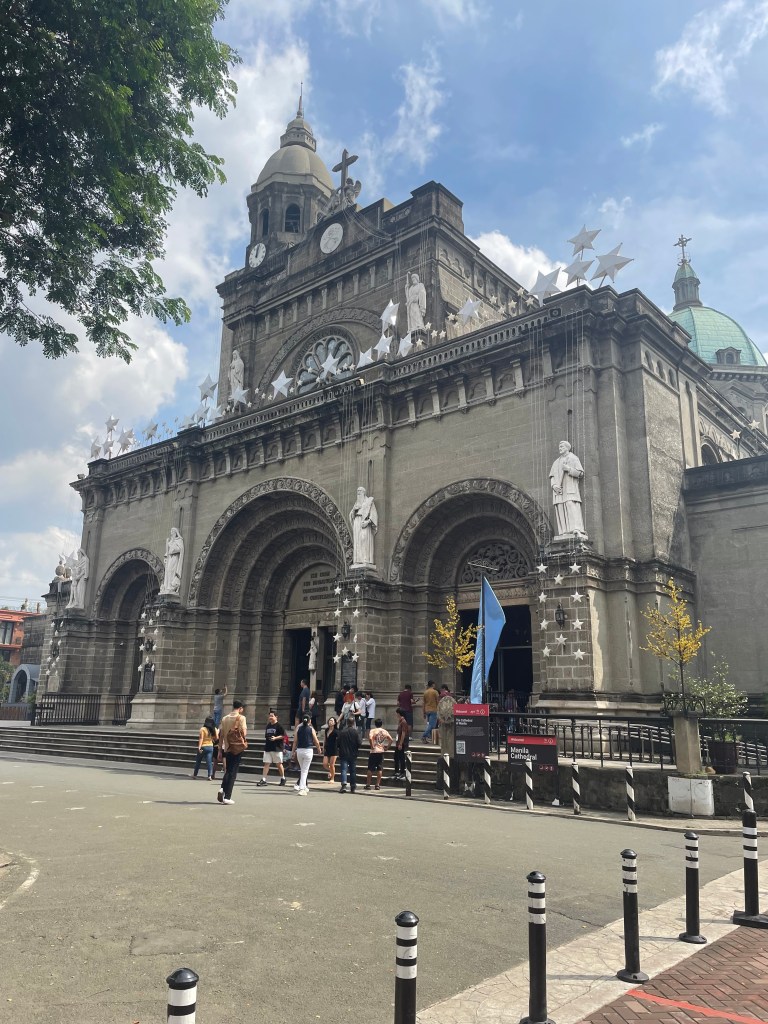
Only a few metres away is another by-product of the Spanish colonisation—religion, with the Philippines being predominantly Catholic. Our next stop was Manila Cathedral, or to use its proper name, the Minor Basilica and Metropolitan Cathedral of the Immaculate Conception, with its ornate interior and stained-glass windows. Also built-in 1571, as well as being a place of worship, it’s also popular with tourists who come to look at its architecture and design.
From religion to commerce, our next stop was Chinatown.
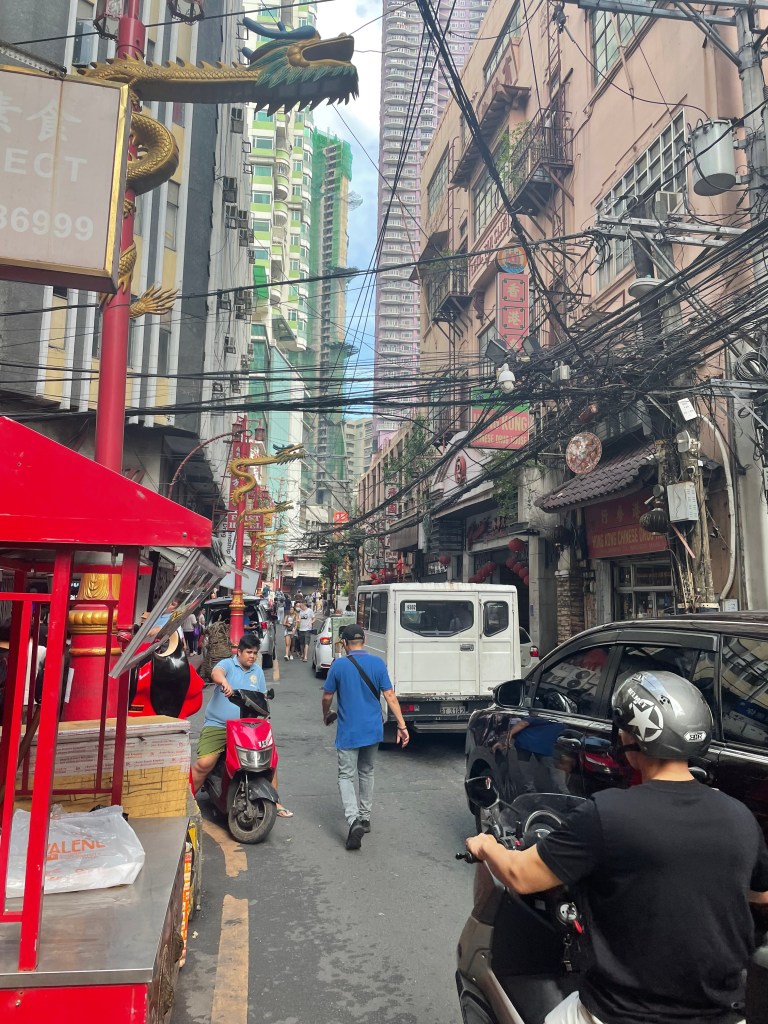
Our guide and driver, Victor, asked if we’d like to walk through Chinatown (instead of driving through) so we could have a closer look. That sounded good to us so he explained where the meeting point was and then drove off. So we walked and walked, and walked. What Victor hadn’t told us was how long the main street was and we started to wonder if we misheard the directions and were now lost in the middle of Manila. But eventually, we saw his car. Before that, we’d had the chance to see and hear the sights and sounds of Chinatown and what stood out the most was how similar it was to every other Chinatown I’ve been to around the world.
The last stop of the day was Rizal Park. On the way, Victor explained one method of managing the traffic in Manila. If your car has a licence plate with certain numbers and letters, you are banned from driving on specified days. However, if you’re rich, you can drive whenever you like because you just buy a few cars with licence plates with a variety of letters and numbers, so every day is available to you.
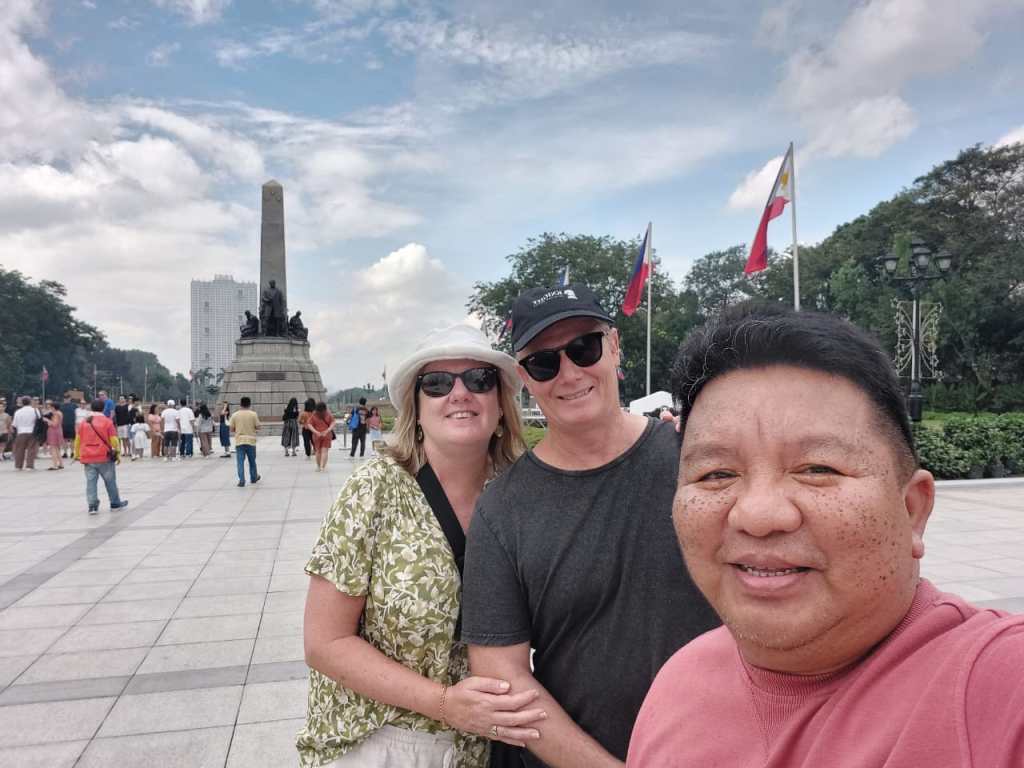
Rizal Park was created in commemoration of the same man as the memorial at the fort. It’s a large open space in the middle of the hustle and bustle. There were people wandering around, enjoying the calm, although, in one corner of the park, there was a busy market so that section wasn’t as calm. It was a nice last spot to come to and join in with the locals who were taking time out from the heaving city.
That night, we ventured around Makati, taking in the sights and sounds, different at night to those during the day but what was common was the amount of people out and about. We only had two nights in Manila as we were flying out to the first of the islands we’d be visiting on our island-hopping tour of the Philippines so we needed to make the most of it.
Joining the throngs on the streets, there was colour and movement and hullabaloos. Flashing lights, laughing, jostling crowds. Nightlife is well and truly alive in Makati. We wandered along the streets, through more mega malls (one of which included the Hard Rock Café which I was most pleased about as I accumulate their Hurricane glasses and now have one more for the collection).
We didn’t stay out too late as we had an early flight the next day and we were one of the few who headed indoors early. From our room, we could hear the city pulsing. But we had other adventures to get ready for. Maybe next time we can spend more time in Manila.
Musings
A Short Stay Inside
By Shelley Banks
Earlier this year, we waited for a cyclone that couldn’t decide when or where it was going to cross the coast. When it finally crossed, it had been downgraded to the point that it wasn’t even considered a cyclone anymore, just a tropical low.
And while we were grateful that it had lost its cyclone status, the rain and wind still needed to be contended with, in the days before the crossing, during the crossing and then for several days afterwards.
Many people were days without power, supermarket shelves were bare and many a house had buckets underneath leaks that inhabitants hadn’t known existed until the torrential rains came.
And the advice given by those in authority was to stay indoors, which most of us did (there will always be idiots who don’t listen). For the first few days, that was fine. But when the inclement weather stretched out into the next week, people began to go stir-crazy.
It wasn’t much to ask, to stay inside while the skies opened up and the wind whooshed across our region. Many homes were damaged, cars went underwater, trees were ripped up, schools were closed and transport was suspended. In the face of these things, spending some time indoors seems minor in comparison. But still, we’re so used to doing what we want, when we want; being told we can’t, takes us a while to get our heads around.
And as soon as the sun came out again, doors were flung open and we ventured outside, pushing our confinement to the furthest reaches of our mind. Until next time that is when we’ll remember how much we didn’t like it last time.
But we should also keep in mind that while some people came out of the wild weather event relatively unscathed, many did not. And we need to remember that too.
Short Stories
The Carer
By Shelley Banks
‘Can you open the window please.’
‘Of course,’ Charlotte replied. ‘Is there anything else I can do?’
Olive shook her head. ‘I’m going to have a rest now.’
‘Ok, I’ll come back in an hour or so and check on you. In the meantime, I’ll get started on some chores.’
As Charlotte closed the door behind her, she realised again how lucky she was to have this job. So many others at the agency had been placed in homes where the residents were prickly and grumpy. Not surprising given what many of them were dealing with – illness, loss of independence, loneliness, grief.
But Olive was lovely, and Charlotte enjoyed her company. And she was learning a lot too. Olive had seen so much and experienced so many things. She was teaching Charlotte something new every day.
Like that morning, when she’d first arrived.
‘Is this what you want to do?’ Olive had asked. ‘Look after old people?’
Charlotte had nodded. ‘Yes, I love it. I feel like I’m helping.’
Olive smiled. ‘You are, and that’s very noble of you to want to dedicate your life to that. But something tells me this wasn’t your first choice of career.’
Charlotte knew Olive well enough by this time, even though she’d only been in the job for two months, that the only thing she could do was be truthful.
‘I actually wanted to be a nurse but my marks at school weren’t enough to get me into university.’
‘Surely there’s something you could do to change that.’
Charlotte shook her head. ‘I’m not very smart.’
‘Says who,’ Olive demanded. ‘You seem very smart to me.’
Charlotte thought back to school and how she was teased for not knowing the answers. Not wanting to dwell on that, she didn’t answer Olive.
‘So now we have something to work towards,’ Olive proclaimed, ignoring the fact that Charlotte hadn’t responded. ‘You are going to university.’
Charlotte shook her head. ‘It’s not for me.’
‘I was once told learning to fly wasn’t for me, but I did it anyway.’
‘You can fly?’ Charlotte asked in disbelief. She hadn’t expected that.
Olive nodded. ‘I lived on a farm for many years, a long way from anywhere. The only way I could get my children to boarding school was to fly them.’
Charlotte was stunned. She’d never heard of such a thing.
‘When I say a long way from anywhere, I mean in the middle of the Northern Territory, and I wanted my children to go to the same school as I did, here in Brisbane. Women didn’t fly back then, or very rarely and against great opposition. It was a different time, but I didn’t let that stop me. So, if you want to be a nurse, then you need to do what you can to get yourself there.’
As Olive slept, Charlotte thought about what she’d said that morning. Could she do it? Could she do what was needed to get her into a nursing degree?
She’d have to look into it now because she’d never hear the end of it from Olive if she didn’t. Even though she’d only been in this job for a short time, already it was having an impact on her life. It wasn’t something she’d expected but it was something she was ready to open the door to.
Something Light
I Think That’s Enough Gin
By Shelley Banks
Different types of alcohol have different effects on different people.
I know many who avoid Bundy rum because of its associations, real or imagined, with aggression and anger. I know others who stay away from gin because they say it makes them depressed. I don’t have any experience with that either so I can’t say whether this is a thing or not.
What I hadn’t come across, until recently, was someone who now avoids gin because it once made them feel short.
The tale starts at a party one night. A group of friends and a few cocktails, all based on gin. One of the partygoers, someone who is not usually a gin drinker, partook of a couple of gin-based cocktails because they tasted nice.
And that’s when things started to go wrong – and not for the usual reasons associated with a few too many cocktails.
First, the partygoer started to feel sad and she couldn’t work out why, especially as she was at a fun party with good friends. Then she started worrying about her appearance, which, as those at the party attested to, there was nothing to worry about at all. And then came the height.
For no reason that anyone could fathom, she started lamenting her perceived lack of height. Then began crying about it. While sitting in a gutter.
The thing is, she’s not short. Not even close to it. If she’s short, then I’m a midget. How on earth had this come about?
None of us knew but until we figured it out, we thought it best to hold back the gin.
Books
If you like my short stories I’ve published ten books.








 September Sprouts