
A Sprout Spends Time by the Ligurian Sea
By Shelley Banks
After spending a wonderful few days exploring the sights of Tuscany, it was time to continue our journey. We boarded a fast train from Santa Maria Novella in Florence to La Spezia Centrale, then transferred to a suburban train bound for Riomaggiore. The journey covered 155 kilometres and was straightforward, delivering us to the heart of the Cinque Terre.
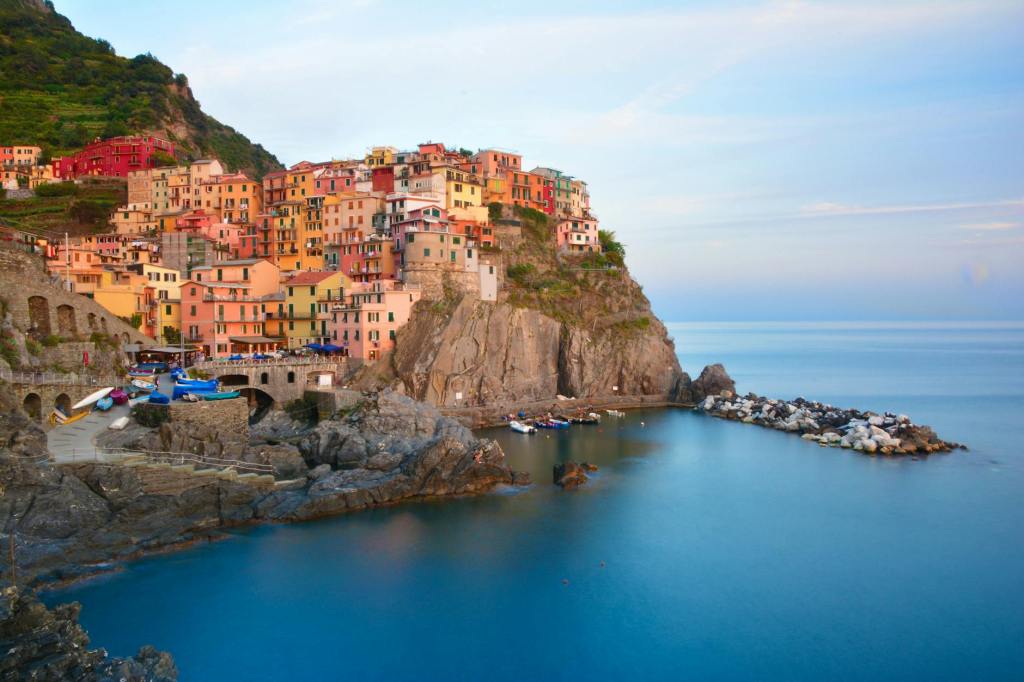
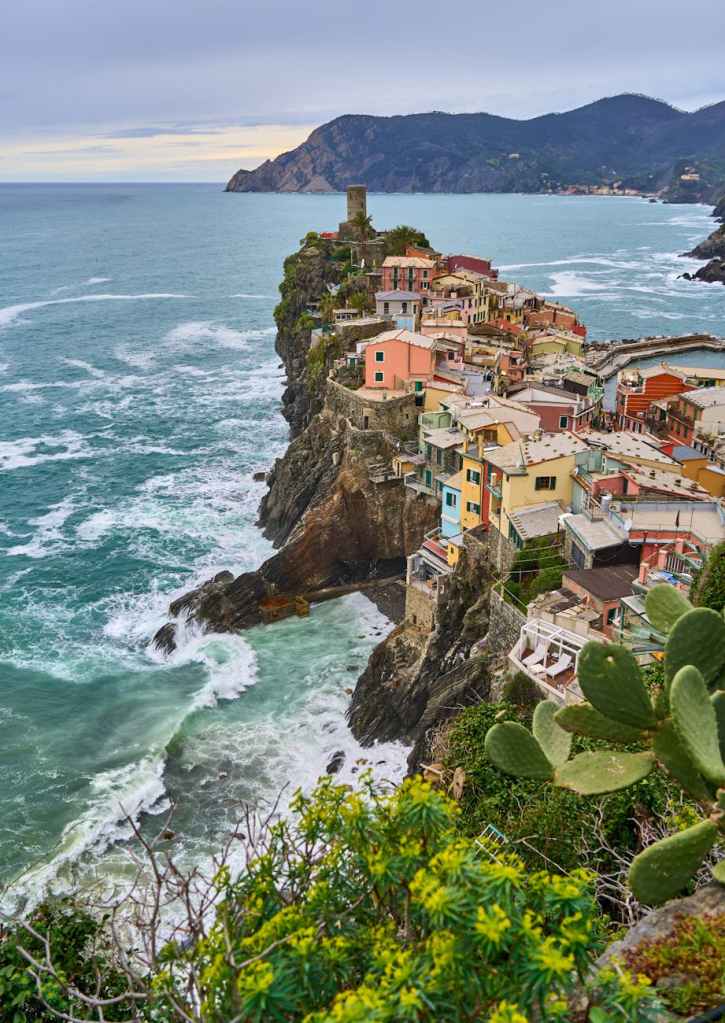
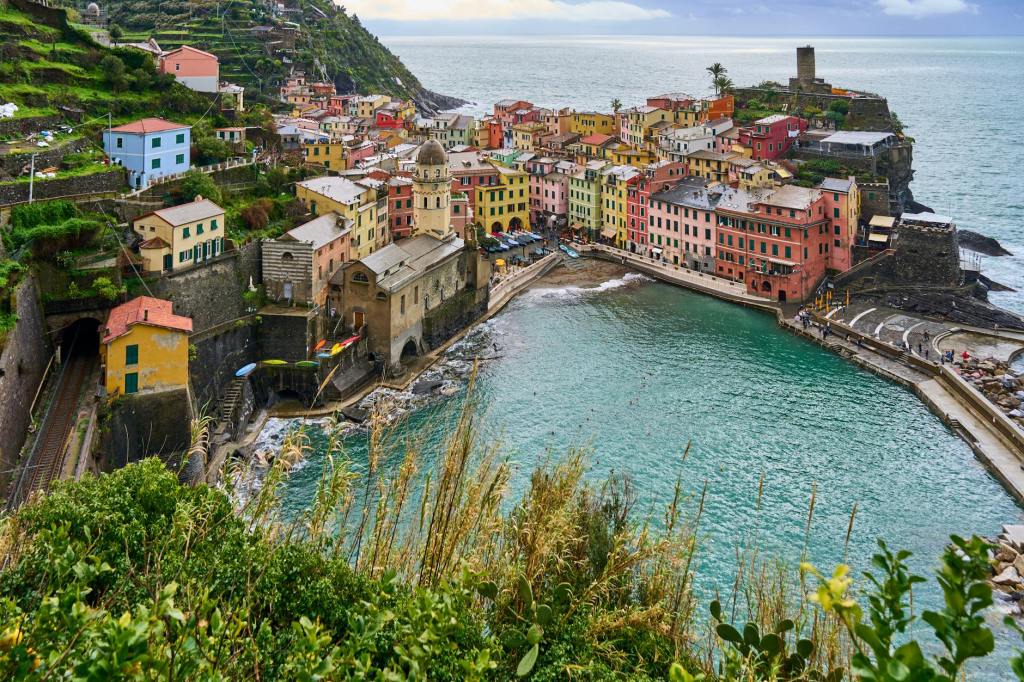
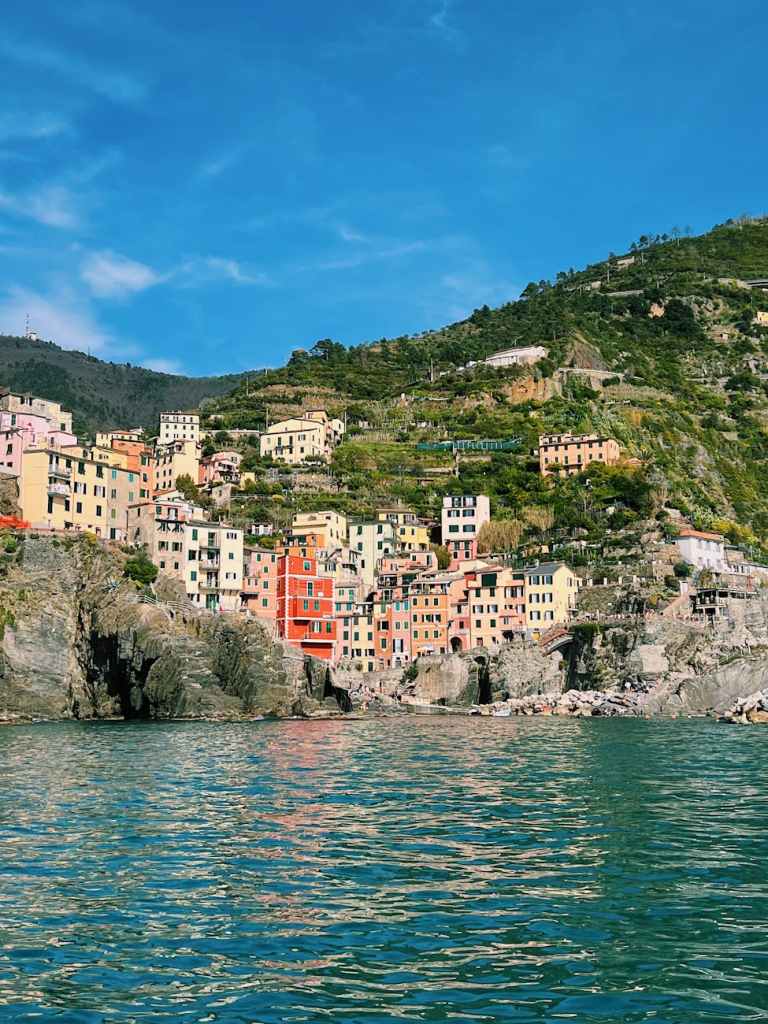
Riomaggiore is the first of the five villages clinging to the rugged Ligurian coast that make up the Cinque Terre, each looking as though it belongs on a postcard. Our initial impression of Riomaggiore was of pastel-coloured houses stacked up the cliffs in a seemingly haphazard fashion, all connected by winding lanes and steep stone steps. The reality of those steps hit us immediately, as we had to lug our suitcases up four flights through a dimly lit passageway to reach our apartment. However, the effort was worth it—the apartment boasted sweeping views over the town and the Ligurian Sea.
That afternoon, we wandered through the narrow streets, discovering a variety of shops, restaurants and bars, as well as exploring the clifftops and admiring the brightly coloured fishing boats bobbing in the water. Sunset in Riomaggiore was particularly memorable. Both locals and visitors gathered on the rocks by the water to watch the sun dip beneath the horizon as waves crashed below. We were fortunate to enjoy the golden glow from the privacy of our rooftop terrace, away from the crowds.
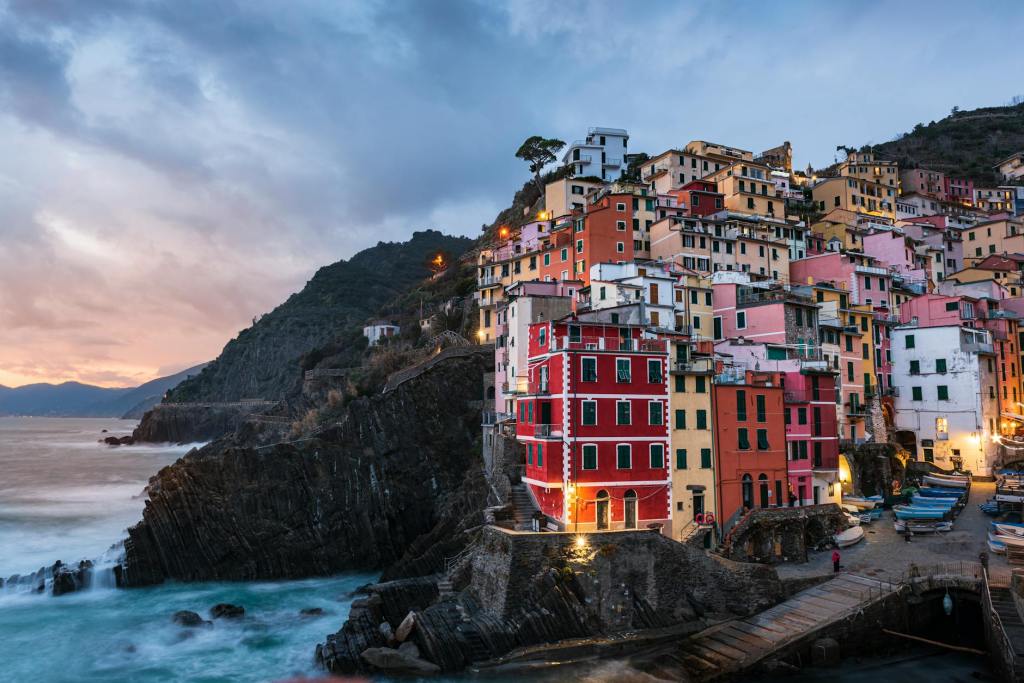
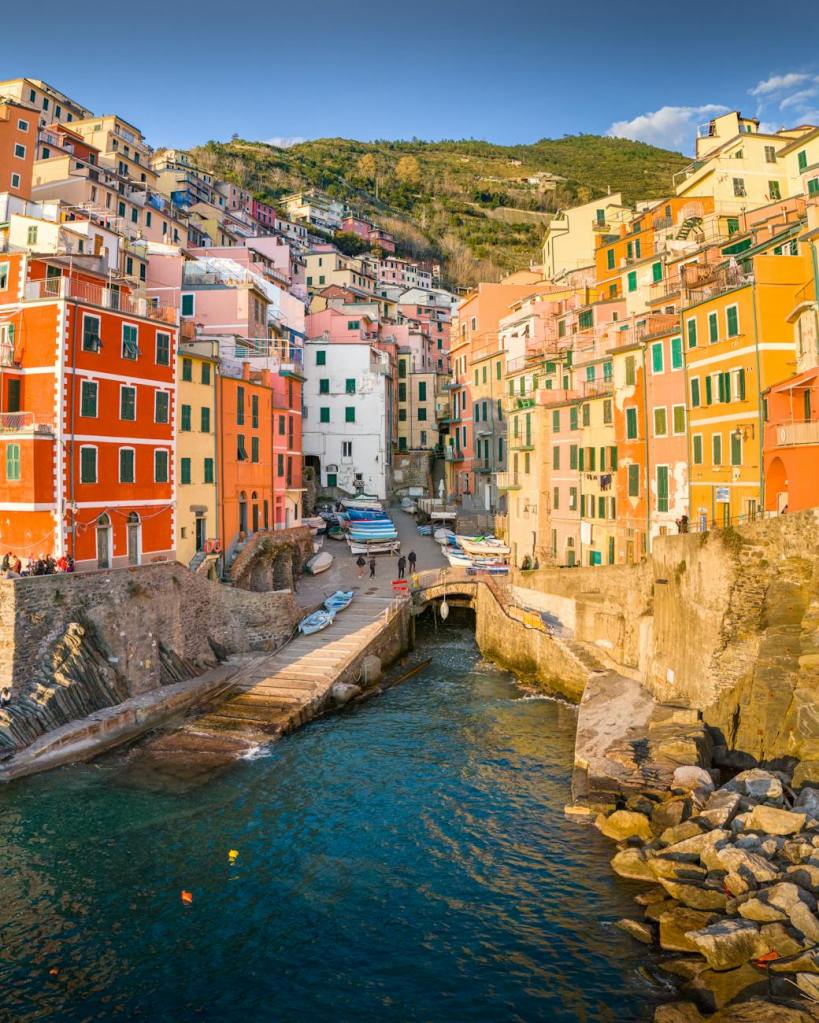
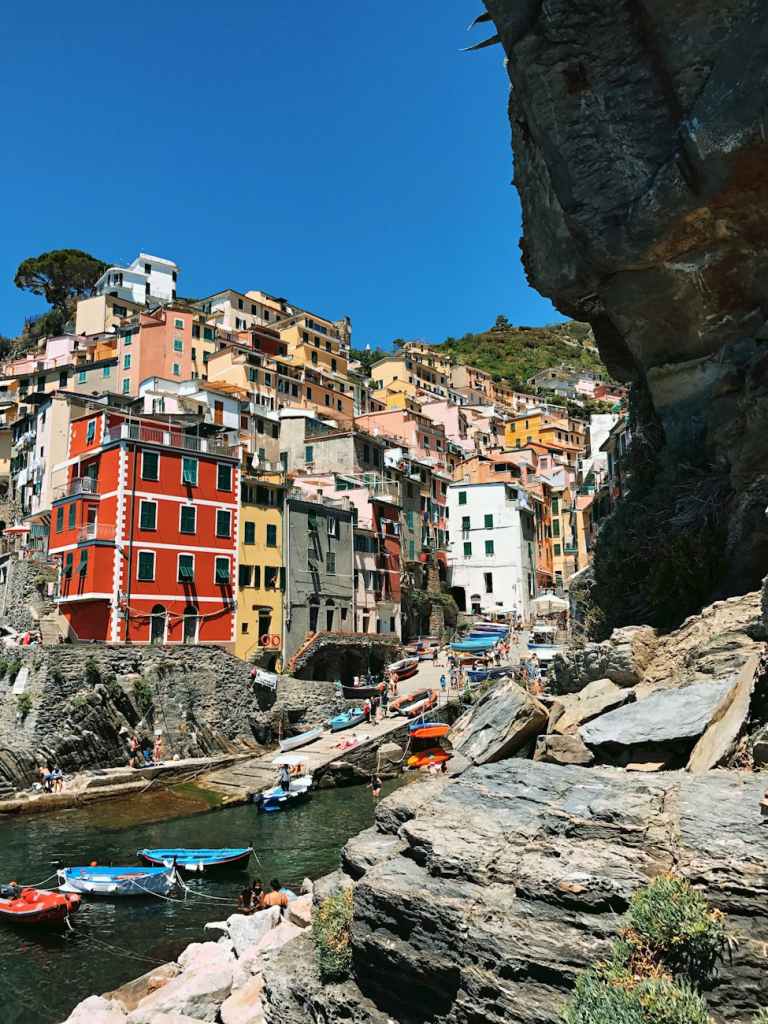
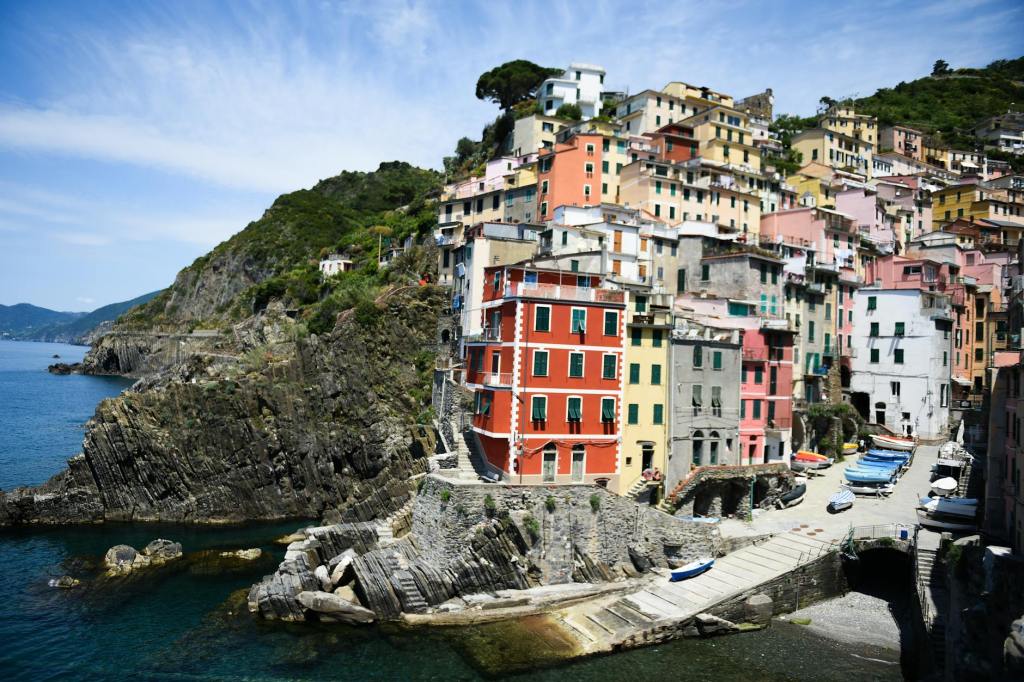
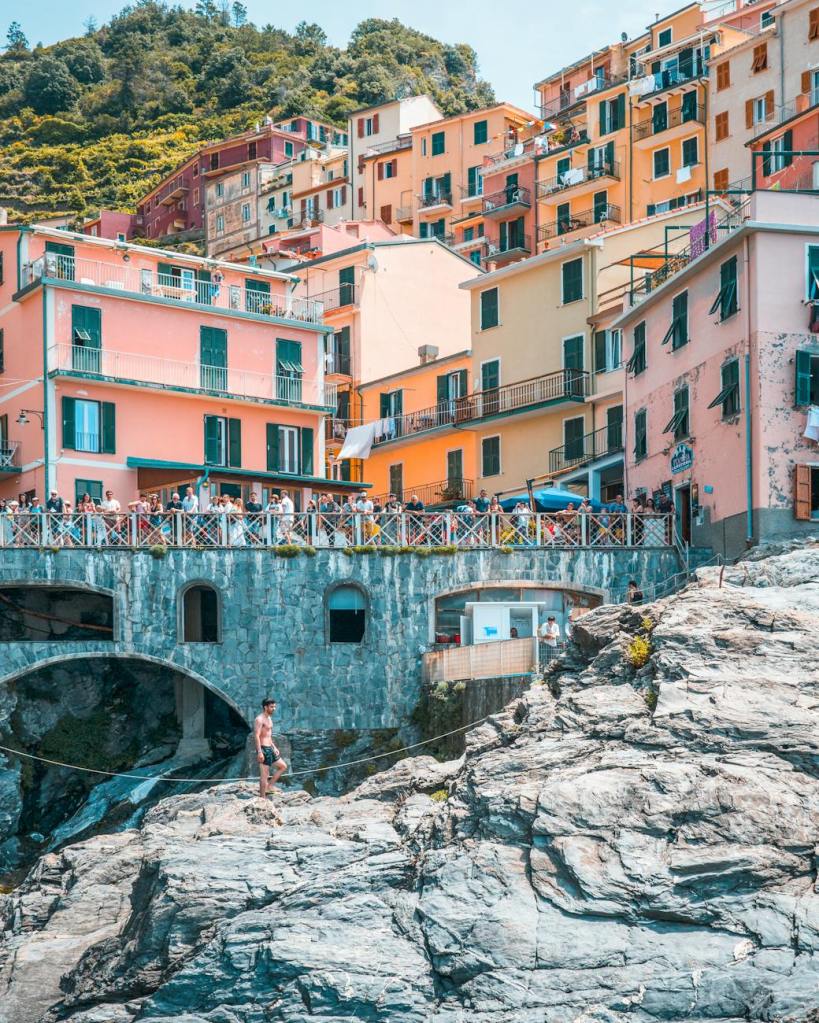
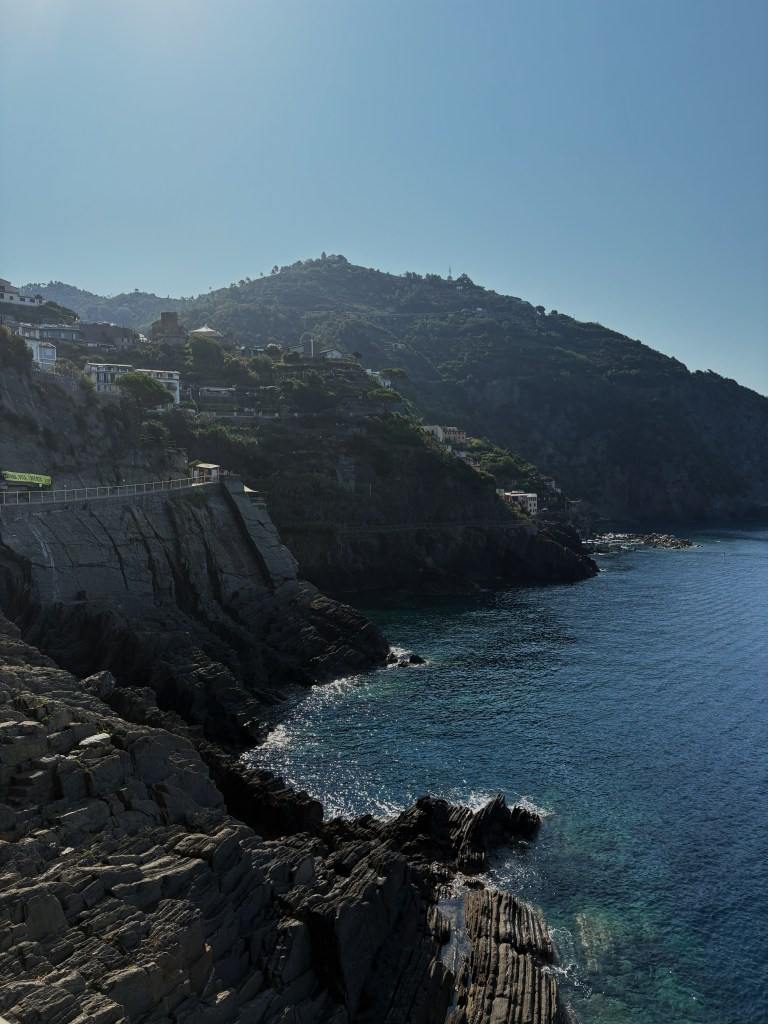
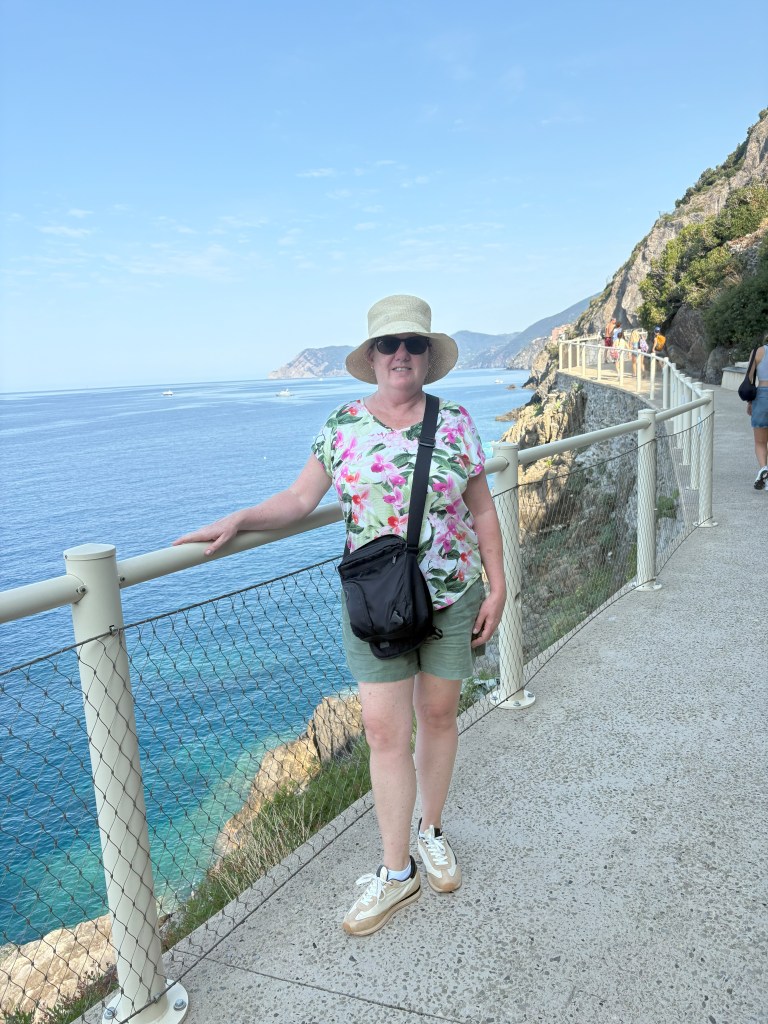
During our stay in the Cinque Terre, we planned to try some of the renowned hikes. On our second day, we set out from Riomaggiore along Lovers Lane, a concrete path that hugs the coastline and leads to Manarola, the second village. From there, we began the first of the more substantial hikes, which would take us to Corniglia, the third village. Hiking the coastal paths between the villages was both challenging and rewarding, providing glimpses of grapevines, olive groves, and the endless blue of the ocean.
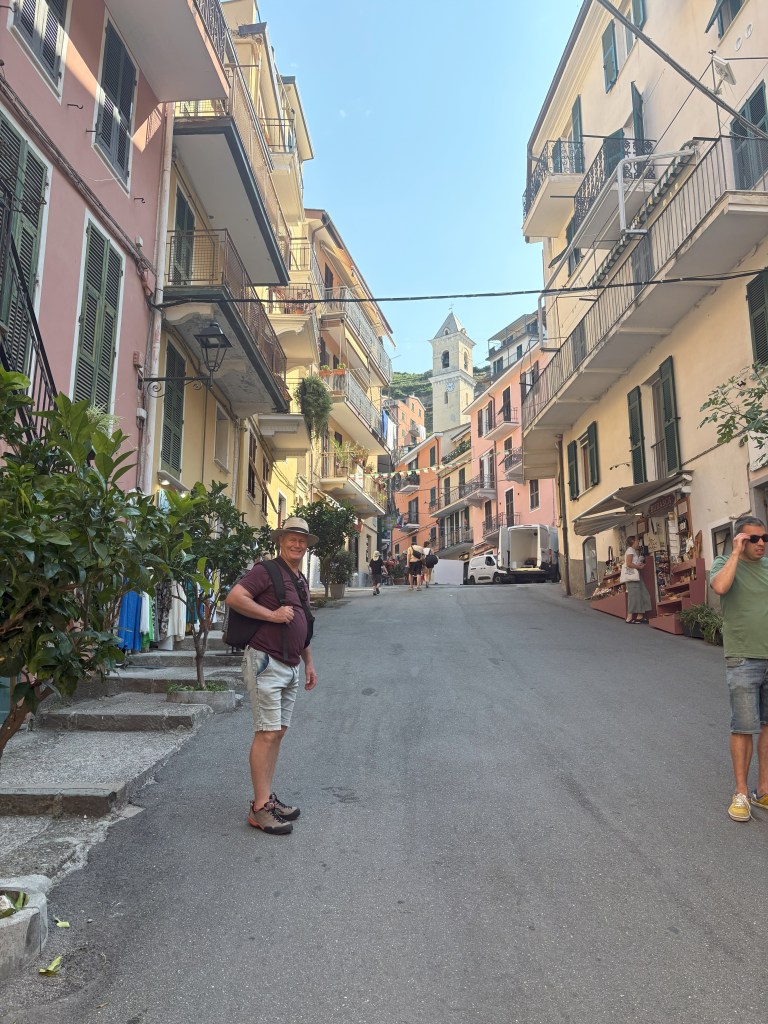
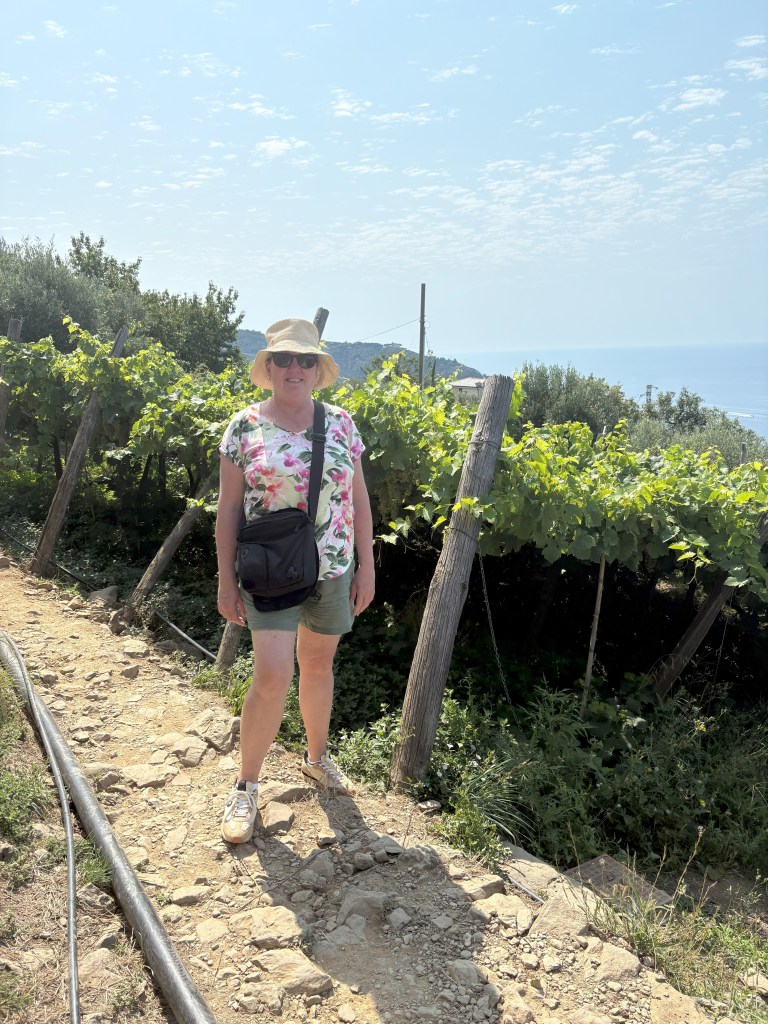
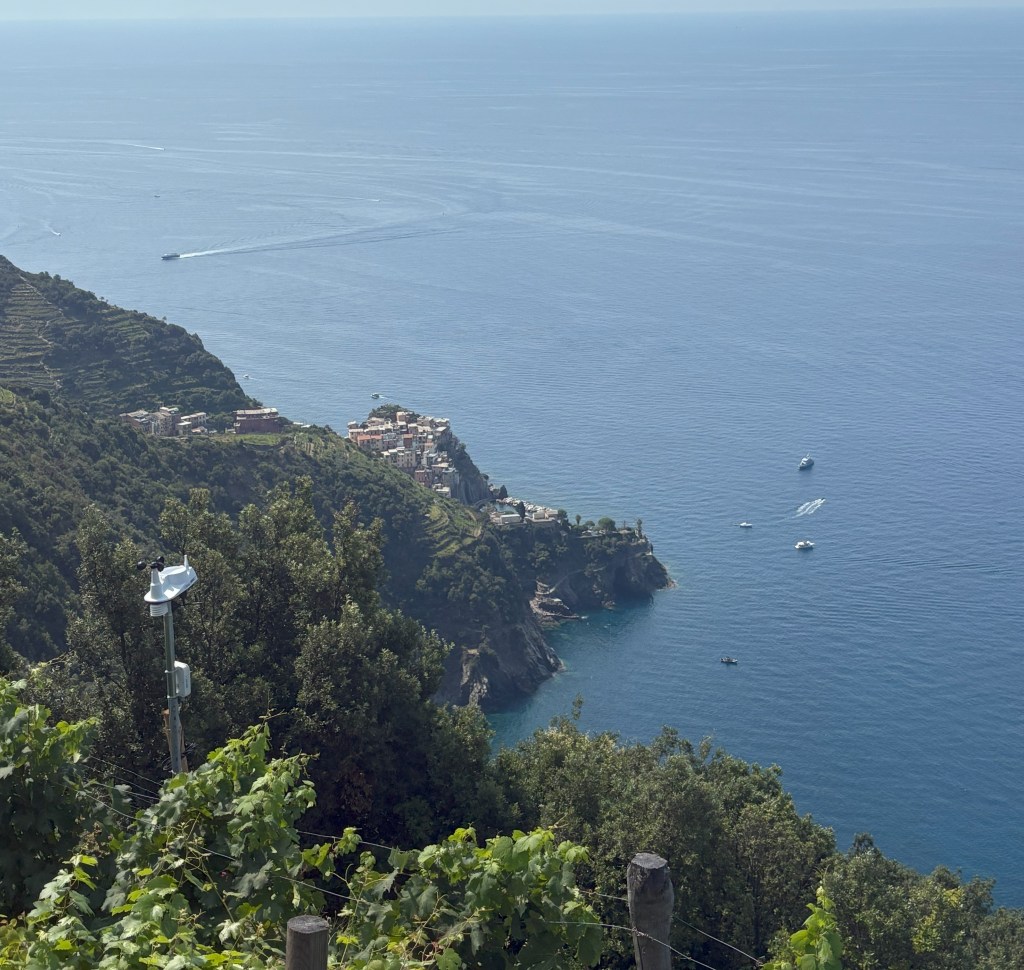
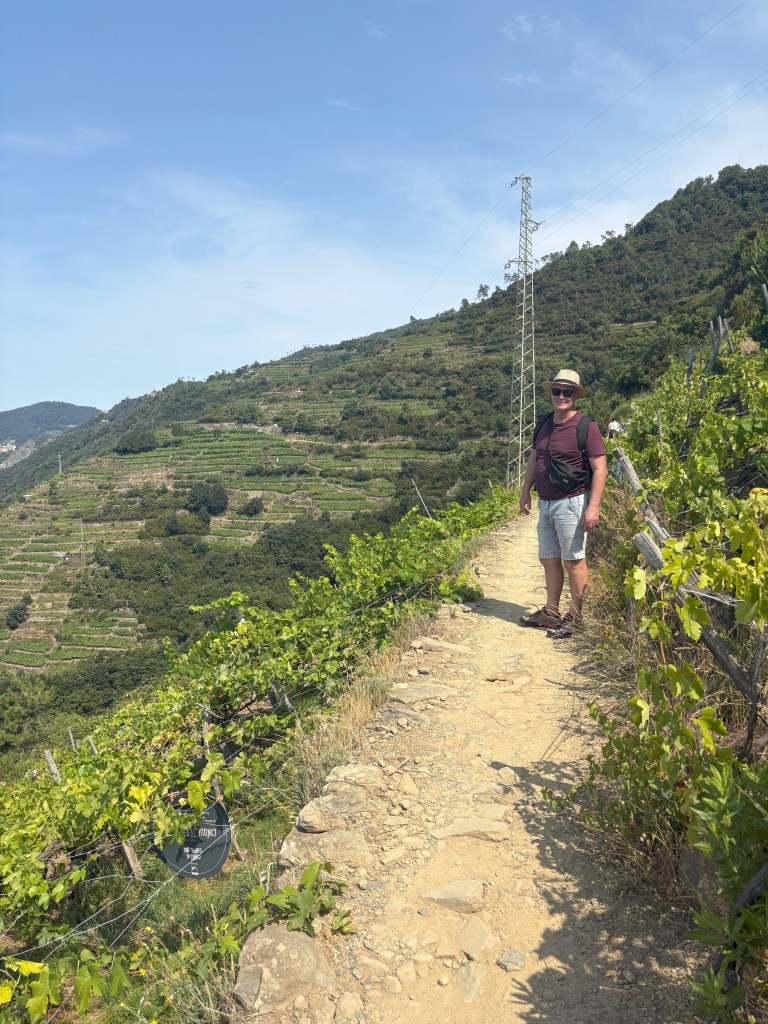
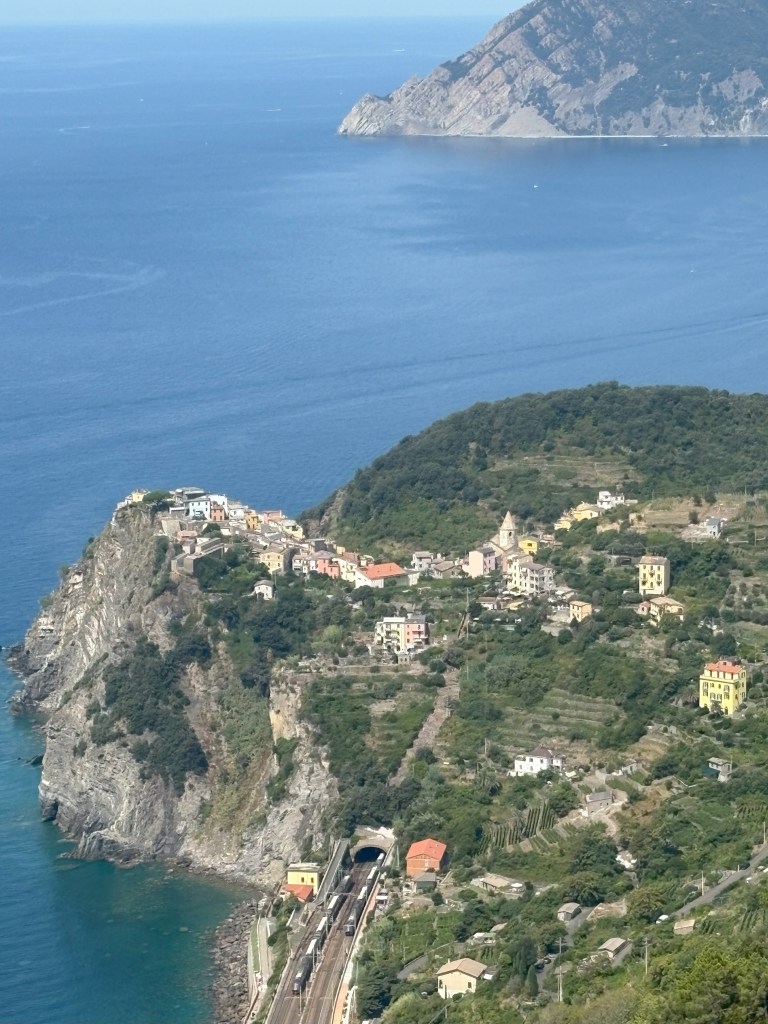
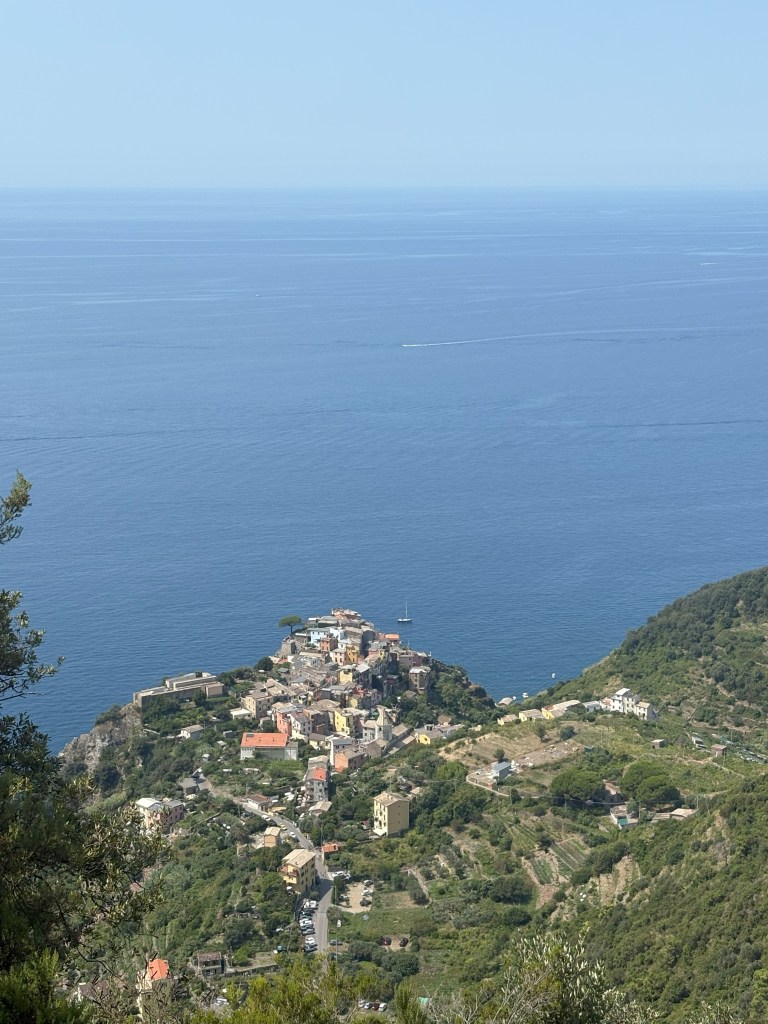
By the end of the day, tired from our walk, we caught the train back to Riomaggiore and enjoyed an early dinner at Dau Cila, a fantastic restaurant overlooking the harbour.
We still had two villages left to explore: Vernazza and Monterosso. The following day, we set out early, hopping on the regional train that winds its way along the dramatic coastline. The journey offered stunning views of sparkling water and terraced vineyards. On arriving in Vernazza, we stopped for a quick gelato in the main street, then climbed the narrow laneways higher until we reached a vantage point with a breathtaking view back towards Riomaggiore. Vernazza felt similar, though smaller, than the villages we had already seen, so we decided to continue on to Monterosso, the last and largest of the five villages.
Monterosso surprised us with its bustling beach and the lively atmosphere along the promenade. Having not yet swum in Italy, we decided this was the perfect opportunity to give it a go. The beach clubs lining the shore were crowded, their rows of striped umbrellas stretching across the sand. After searching for a while, we eventually found a club with a few spaces left and paid 38 Euro each for the use of an umbrella and two sunlounges.
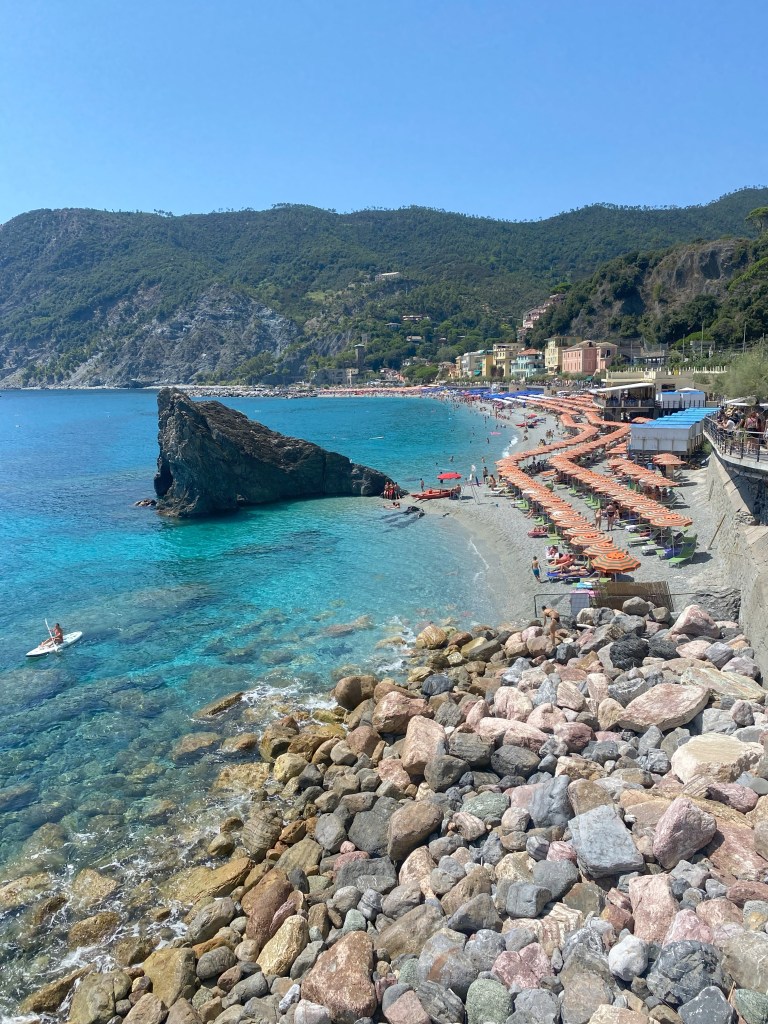
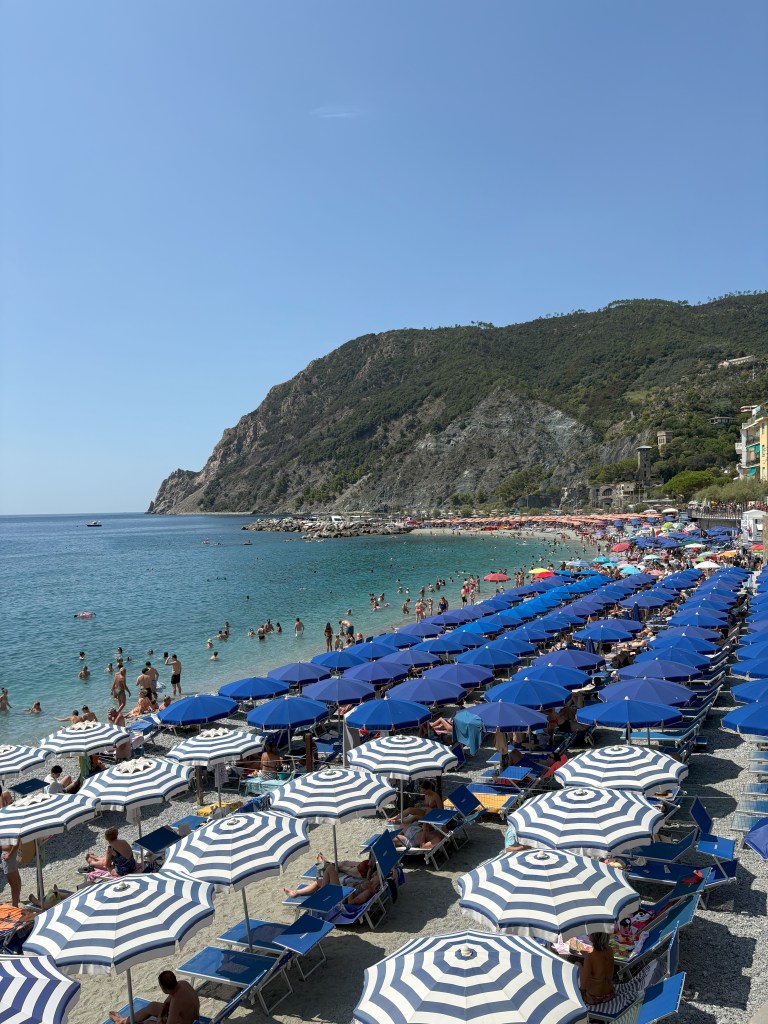
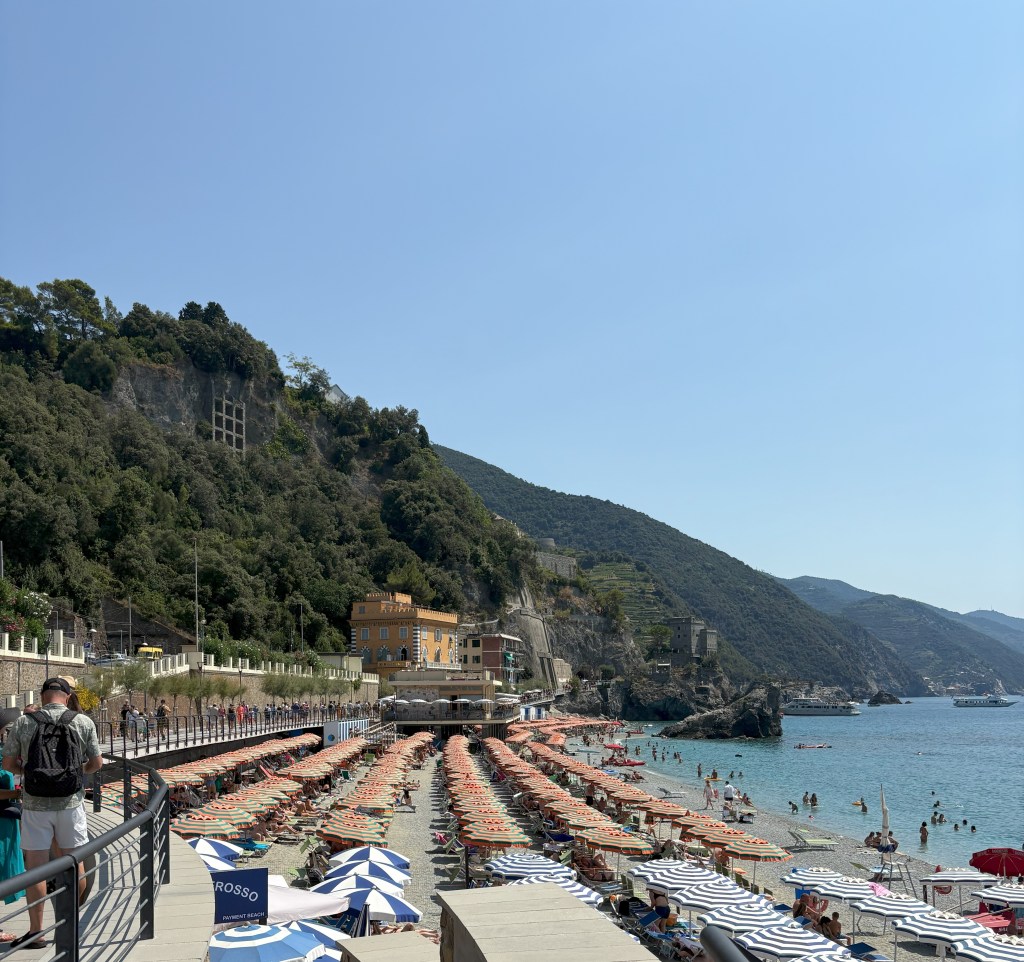
Although paying for beach access was unfamiliar to us, we chose (eventually) not to worry about the exchange rate and simply enjoyed the experience. The water itself was beautiful and inviting, though the sharp pebbles leading into the sea were not particularly pleasant. Once in the water, we discovered rocks underfoot, which made paddling a bit uncomfortable. Regardless, we were keen to experience an Italian beach club, and this visit to Monterosso provided us with that chance.
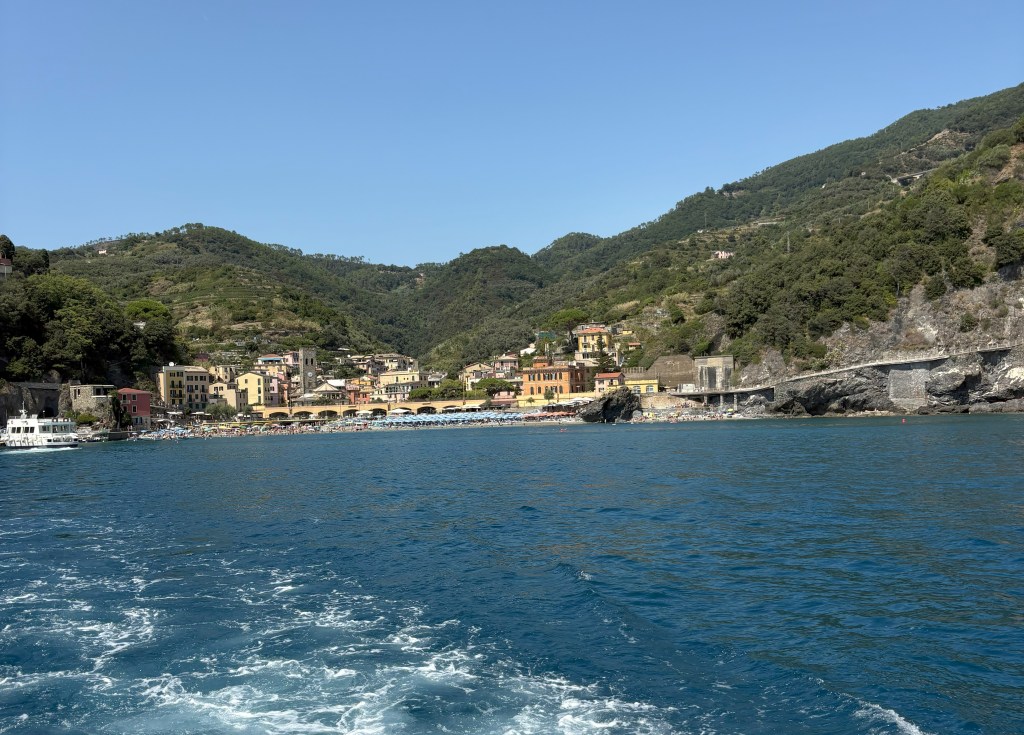
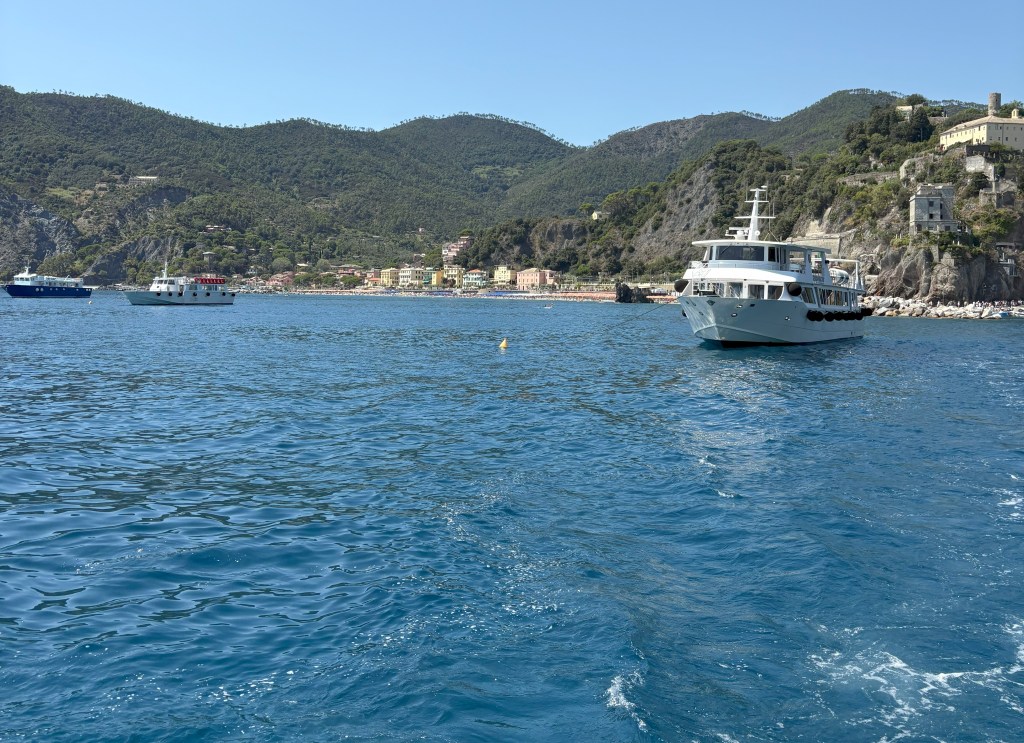
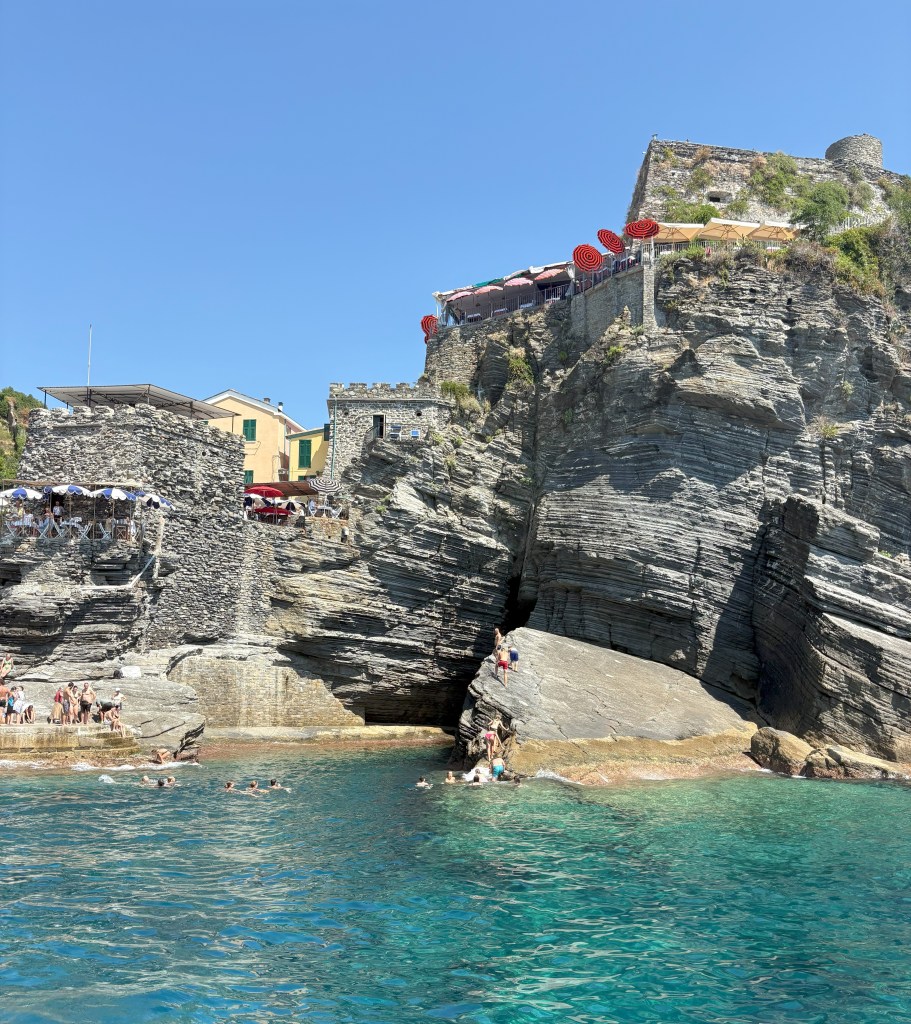
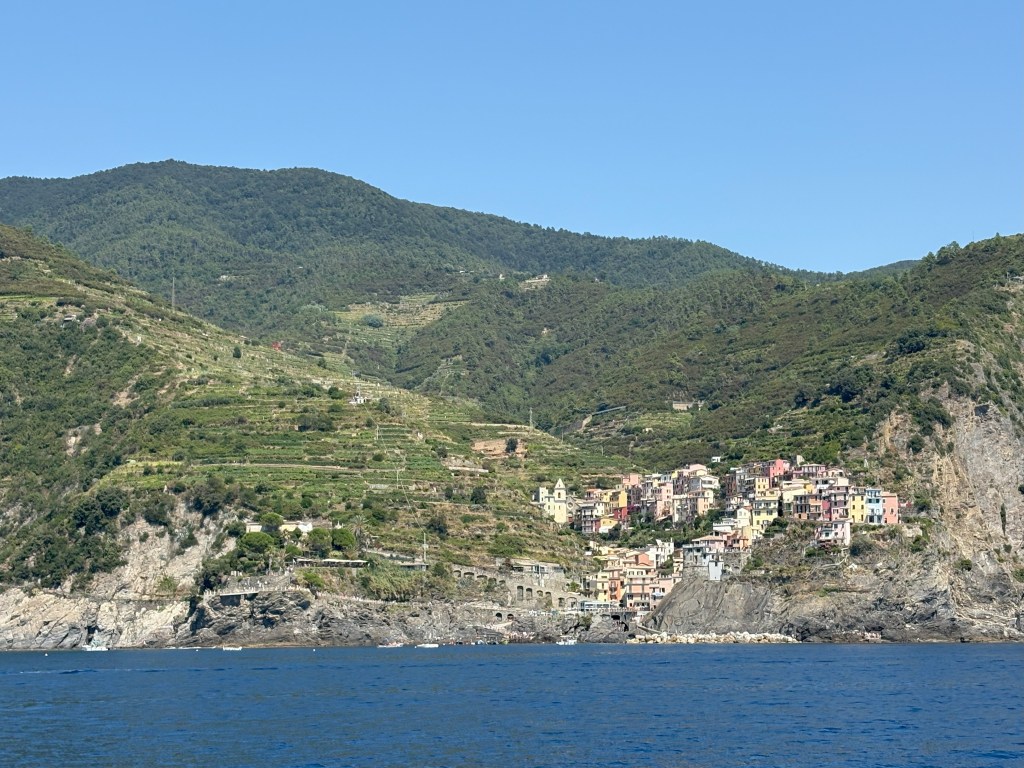
As the day came to an end, we boarded the public ferry for a scenic journey back to Riomaggiore. This return trip offered spectacular views of all five villages from the water—a fitting finale to our time spent exploring the Cinque Terre region.
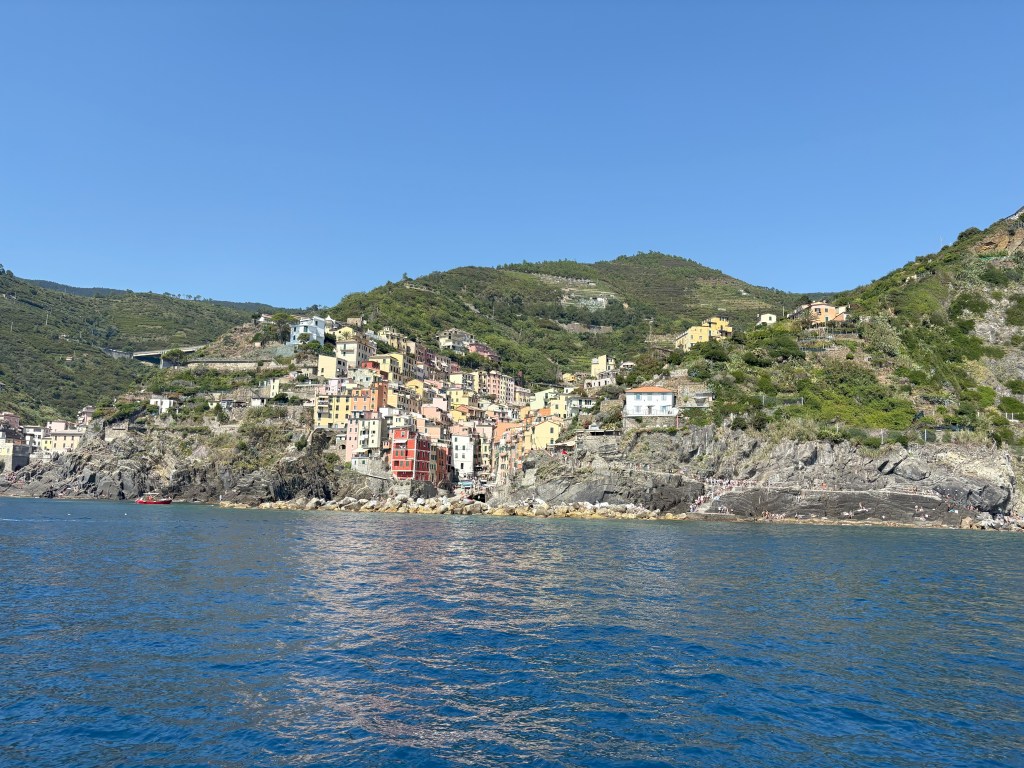
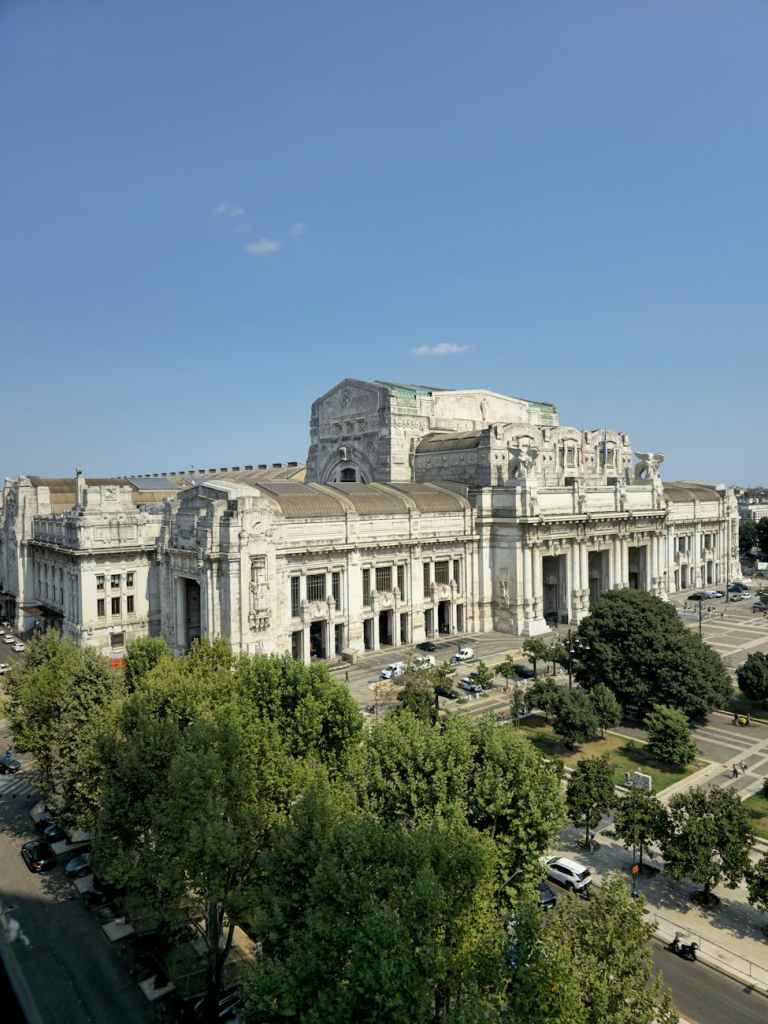
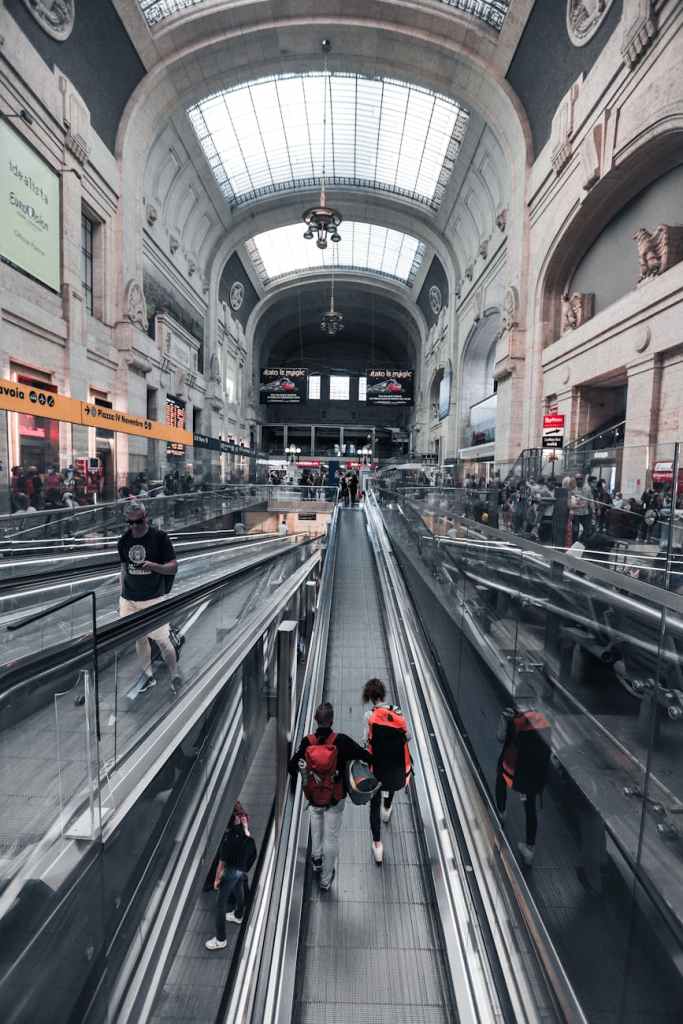
The following morning, we bid farewell to the coast and embarked on a multi-stage train journey. Our first train departed for La Spezia Centrale, where we transferred to another service bound for Parma. At Parma, we switched trains again, this time heading towards Milan Centrale. Navigating the vast and busy Milan Centrale station required some patience, but we eventually located our connection.
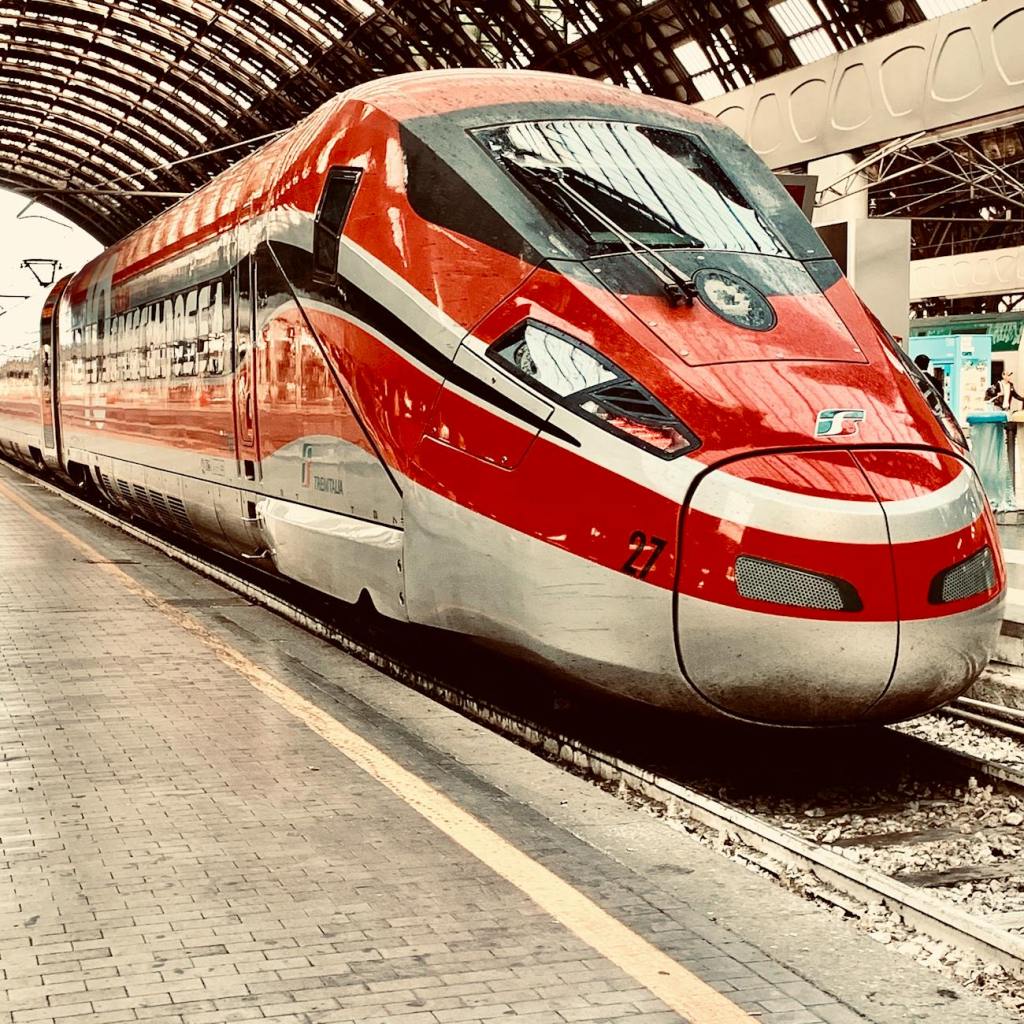
To our pleasant surprise, our final train leg was in first class. As the train departed Milan Centrale, we couldn’t help but feel that travelling in such comfort could easily become a habit. Our ultimate destination for the day was Lake Como, from where we planned to cross the lake and arrive at Bellagio.
Books
If you like my short stories, I’ve published ten books.










 September Sprouts